

Raw Honey vs Processed Honey: Which One Should You Choose?
Learn the key differences between raw honey and processed honey, their benefits, natural characteristics, and how to choose the right honey for your lifestyle.
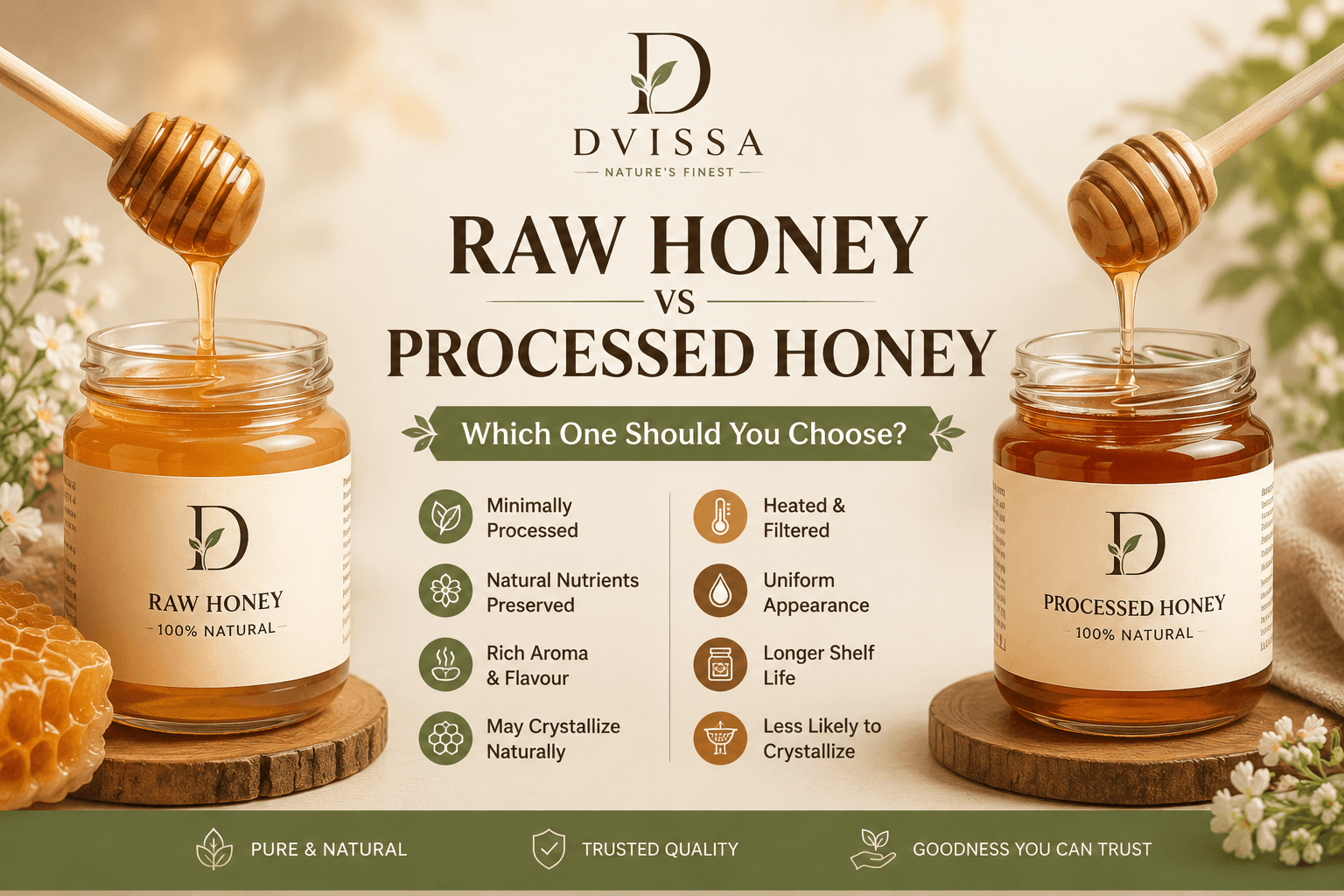
Honey is one of the most popular natural sweeteners, but not all honey is processed the same way. Understanding the difference between raw honey and processed honey can help you make a better choice for your lifestyle.
What Is Raw Honey?
Raw honey is honey that undergoes minimal processing after harvesting. It is typically strained to remove natural impurities while preserving its natural texture, aroma, and flavour.
Because it is minimally processed, raw honey may vary in colour, taste, and texture depending on the flowers visited by the bees.
What Is Processed Honey?
Processed honey undergoes additional steps such as heating and filtration to create a more uniform appearance and smoother texture.
This helps improve shelf presentation and consistency but may alter some of the honey's natural characteristics.
Key Differences
| Feature | Raw Honey | Processed Honey |
|---|---|---|
| Processing | Minimal | Additional heating & filtration |
| Texture | Natural | Smooth |
| Appearance | Varies naturally | Uniform |
| Crystallization | Common | Less common |
Why Does Honey Crystallize?
Crystallization is a natural process and does not mean the honey is spoiled. Many authentic honey varieties naturally crystallize over time due to their sugar composition.
Which Honey Should You Choose?
If you prefer a traditional and minimally processed option, raw honey may be the better choice. If you prefer a smooth texture and uniform appearance, processed honey may suit your needs.
Conclusion
Both raw and processed honey have their place, but many consumers choose raw honey because it remains closer to its natural form.
At DVISSA, we focus on carefully selected honey varieties including Multiflora, Wild Forest, Kikar, and Sesame Honey to provide quality products that customers can trust.
Share this article